
We have all been there. You wake up, look out the window, and see a thick blanket of white covering the driveway. Your first thought isn’t about breakfast; it’s: “Is school cancelled today?” In Ontario, winter isn’t just a season, it’s a lifestyle. From the snowy streets of Ottawa to the windy shores of Windsor, students and parents across the province spent months wondering if they’ll get that magical day off.
But how do you know for sure? Waiting for the morning news or refreshing a social media feed can be stressful. That is where a snow day calculator comes into play. Instead of just guessing, you can use data and weather patterns to predict the odds of a school closure. In this guide, we’re going to dive deep into how Ontario school boards make their decisions and how you can stay one step ahead of the storm.
What Exactly is a Snow Day Calculator?

Think of a snow day calculator as a weather-savvy friend who is really good at math. It’s a digital tool that looks at current weather conditions like how much snow is falling, how fast the wind is blowing, and the temperature and compares them to historical data.
For students in Ontario, these calculators are incredibly popular because our weather is so unpredictable. A storm might hit London with full force but leave Toronto with just a light dusting. A good calculator doesn’t just look at the province as a whole; it looks at your specific region to give you a percentage chance of staying home in your pajamas.
How Ontario Weather Impacts School Closures
Ontario is massive. Because of its size, the weather in the North is very different from the weather in the South. This is why a “one size fits all” prediction doesn’t work here.
- The Lake Effect: If you live in cities like Barrie or St. Catharines, you know all about lake-effect snow. This happens when cold air moves over the warmer waters of the Great Lakes, picking up moisture and dumping it as heavy snow. This can lead to sudden “whiteout” conditions where you can’t even see the end of your driveway!
- The Wind Chill Factor: Sometimes, it’s not the snow that cancels school—it’s the “feels like” temperature. In places like Thunder Bay or Sudbury, the wind chill can drop to -40°C. At these temperatures, it isn’t safe for students to wait at bus stops, which often leads to cancellations even if the skies are clear.
- Freezing Rain and Ice: This is the secret villain of Ontario winters. A few centimeters of snow is manageable, but a thin layer of ice on the roads in Hamilton or Kitchener can turn school buses into ice skates. Safety is always the number one priority for school boards.
Which Ontario School Boards Decide on Snow Days?
In Ontario, the decision to close schools or cancel buses isn’t made by the government in Toronto. It is made by local school boards and transportation consortia. Here are some of the major boards that people often check:
- TDSB & TCDSB: Serving the city of Toronto, these boards rarely close schools entirely, but they do cancel buses when the city streets become too clogged with slush and snow.
- Peel District School Board: Covering Mississauga and Brampton, this board deals with heavy commuter traffic, making road safety a huge factor in their morning decisions.
- Ottawa-Carleton District School Board: Being one of the coldest capitals in the world, Ottawa is no stranger to winter weather. They are experts at handling deep snow.
- York Region District School Board: Serving areas like Vaughan and Markham, they often have to coordinate with regional transit to ensure students can get to school safely.
The Science Behind the Prediction: How It Works
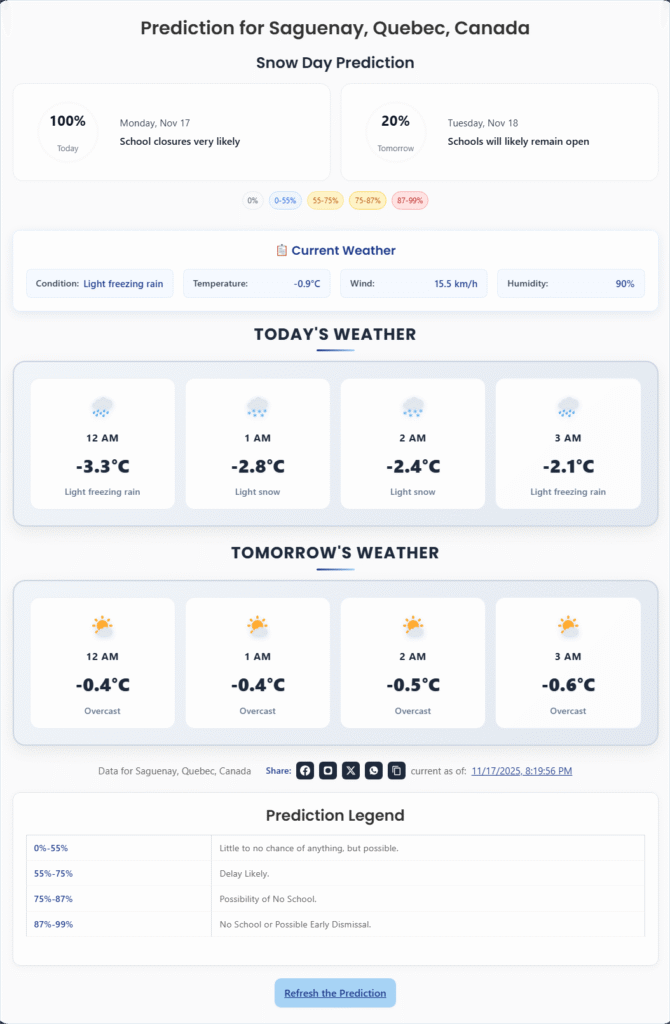
You might wonder, “How can a website know if my school will close?” It’s all about the variables. When you use a snow day calculator Ontario students trust, the algorithm is usually looking at these key factors:
1. Accumulation (The “How Much” Factor)
This is the most obvious one. If the forecast calls for 20cm of snow in Guelph, the odds of a snow day go way up. However, 5cm might not be enough to stop the buses.
2. Timing of the Storm
Timing is everything! If a storm hits at 2:00 AM and ends by 5:00 AM, snow plows have time to clear the roads before the buses start their routes. But if the heaviest snow is predicted for 7:00 AM—right when everyone is heading out the chances of a cancellation skyrocket.
3. Road Conditions and Visibility
Visibility is just as important as the snow on the ground. High winds causing “blowing snow” can make it impossible for bus drivers to see the road ahead. This is common in the open rural areas around Kingston or Oshawa.
Why School Buses are the First to Be Cancelled
Often, you will hear that “buses are cancelled, but schools remain open.” This can be confusing. Why does this happen?
School buses are large, heavy vehicles that are difficult to stop on ice. Many Ontario school boards use a “Transportation Consortium” to decide if it’s safe for buses to run. If the side roads in rural areas are too dangerous, they will cancel the buses. However, since many teachers and students in cities can walk to school or use public transit, the physical building stays open for those who can make it safely.
Tips for Using a Snow Day Predictor Effectively
To get the most accurate results for your area, follow these simple steps:
- Enter Your Specific Location: Don’t just search for “Ontario.” Input your city, whether it’s Windsor, Sarnia, or Peterborough.
- Check the Evening Before: Most calculators give a “preliminary” chance the night before. This helps you decide if you should finish that math homework or maybe sleep in a little!
- Confirm in the Morning: Weather changes fast. A storm might speed up or slow down overnight. Always check the calculator again at 6:00 AM for the most accurate “Live” update.
What to Do When a Snow Day is Confirmed
Congratulations! The calculator was right, and the school board has called a snow day. Now what?
- Stay Safe: If the weather is bad enough to cancel school, it’s bad enough to stay off the roads.
- Help Out: Be a hero and help your parents shovel the walk. It’s great exercise and makes the hot cocoa taste even better afterward.
- Catch Up or Relax: Use the time to finish a book, play some video games, or catch up on sleep.
- Check Local News: Keep an eye on local stations in Cambridge or Burlington to see if community centers or libraries are also closed.
The Future of Snow Days in the Digital Age
With the rise of online learning, some people worry that snow days might disappear forever. While some boards might move to “Remote Learning Days,” there is something special about an Ontario snow day that can’t be replaced by a Zoom call. It’s a day for the community to slow down, for kids to be kids, and for everyone to appreciate the raw power of a Canadian winter.
Conclusion: Ready for the Next Big Storm?
Winter in Ontario is beautiful, but it requires preparation. By using a snow day calculator, you aren’t just guessing you’re using the best tools available to plan your week. Whether you are hoping for a day off in Milton or just want to make sure you can get to work in Brantford, staying informed is the key to a stress-free winter.
So, the next time the sky turns grey and the wind starts to howl, head over to your favorite calculator, plug in your city, and see what the numbers say. Will you be hitting the sledding hills or hitting the books? Only the data knows for sure!
FAQ’s About Snow Day Calculator Ontario
How accurate is the Ontario snow day calculator?
While no tool is 100% perfect, our calculator uses real-time weather data, wind speeds, and historical school board patterns to give you a highly reliable prediction. It’s a great way to gauge the likelihood of a closure before the official morning announcement is made.
Why are buses cancelled but schools stay open?
This is common in cities like Toronto or Hamilton. Buses are heavy and hard to stop on icy side roads. If the transportation consortium deems roads unsafe for large vehicles, they cancel buses. However, schools may stay open for students and staff who can walk or use public transit safely.
What time do Ontario school boards announce closures?
Most school boards, including the TDSB and Peel, aim to make their final decision by 6:00 AM or 6:30 AM. This gives parents and drivers enough time to plan. Our calculator updates throughout the night so you can see the probability shifting as the storm moves closer.
Does the calculator work for all Ontario cities?
Yes! Whether you are in Ottawa, London, or a rural area near Barrie, you can get a localized prediction. Because Ontario is so large, weather varies by region. Our tool looks at your specific zip code or city name to ensure the “Lake Effect” or local wind chills are factored in.
At what temperature does school get cancelled in Ontario?
There is no “magic number,” but many boards consider cancellations when the wind chill hits -35°C to -40°C. At these extremes, exposed skin can freeze in minutes, making it dangerous for students to wait at bus stops, even if there isn’t a single flake of snow on the ground.
Can I use the predictor for private schools in Ontario?
While the calculator focuses on the major public and catholic school boards, private schools often follow the lead of their local public board. If the public buses in Mississauga or Markham are cancelled, there is a very high chance that local private schools will also close their doors.