
How cold is “too cold” when it comes to education? This is the question on every student’s mind as the winter months approach and the morning frost begins to thicken on the windows. While we often think of massive blizzards and knee-deep drifts as the primary reasons for a day off, extreme temperature, specifically the “Wind Chill” is a silent factor that cancels school just as often as a snowstorm. For school administrators, deciding to close the doors isn’t just about the numbers on a thermometer; it is a complex calculation involving safety, logistics, and the physical limits of the human body.
The Science of the “Feels Like” Temperature
Why does a thermometer reading of 0°F feel manageable on a calm day but unbearable when the wind picks up? The answer lies in the Wind Chill Factor. Our bodies naturally produce a thin layer of warm air right next to our skin that acts as a tiny, invisible blanket. When the wind blows, it strips that layer away, forcing our bodies to work much harder to maintain a safe internal temperature.
For most school districts, the magic number for a cancellation usually falls between -15°F and -25°F wind chill. At these levels, the National Weather Service often issues a Wind Chill Advisory or Warning. Why these specific numbers? Because at -25°F, frostbite can set in on exposed skin in as little as 30 minutes. If you are tracking the weather for your area, you might find it helpful to look at What Are the Chances of a Snow Day Tomorrow? (2026 Prediction Guide) to see how these temperature drops affect local probability scores.
Why Schools Prioritize Temperature Over Snow

Can a clear, sunny day still result in a school closure? Yes, if the air is dangerously cold. While snow is visible and “fun,” extreme cold is a “hidden” danger. Schools have a legal duty to protect students from the moment they leave their front door until they return home.
One of the biggest concerns for superintendents is the “Bus Stop Factor.” Many students, especially in rural or urban areas, have to walk up to half a mile to reach their bus stop or school building. If a student is standing still in -20°F weather and the bus is running 10 minutes late due to a cold engine, that student is at high risk for hypothermia. You can learn more about the logistical side of these tough choices in our article What Is a Snow Day and How Do Schools Decide?.
The Logistics of a Deep Freeze: More Than Just Cold Air
Have you ever wondered if the school building itself can handle the cold? It’s not just the students who suffer when the temperature drops; the infrastructure of the school district is put to the test as well.
- Diesel Engine Failure: Most school buses run on diesel fuel. When temperatures drop significantly, diesel can undergo a process called “gelling,” where it turns into a thick, waxy substance that clogs filters and prevents engines from starting. If 30% of a fleet won’t start, the school cannot physically transport its students.
- Heating System Limits: Many older school buildings use boiler systems that are decades old. These systems are designed to keep a building at 70°F when it is 20°F outside. If it drops to -10°F, the heaters might only be able to struggle up to 55°F which is far too cold for a productive classroom.
- Water Main Breaks: Extreme cold causes the ground to shift and pipes to freeze. A school without running water cannot stay open because it cannot provide bathrooms or cafeteria services.
To see how these technical factors are weighed by modern algorithms, you might be interested in reading How accurate is snow day calculator?, which explains how data points beyond just “snow” are used to predict days off.
Regional Differences: Alaska vs. Florida
Is it fair that a student in Minnesota has to go to school in 0°F weather while a school in Georgia might close at 30°F? It might seem unfair, but it comes down to infrastructure and acclimatization.
In northern regions, schools are built with heavy insulation, and the city has the equipment to keep roads clear and salted. Students in these areas usually own high-quality parkas, boots, and thermal gear. In contrast, southern states rarely face these temperatures. Their buses may not have the right heaters, and their students may only own light jackets. This regional difference is why Snow Day Predictor 2025 uses localized data to give you an accurate forecast based on your specific zip code’s history.
The “Danger Zone”: Understanding Frostbite and Hypothermia
What actually happens to the body when it gets too cold? This is the primary reason school boards are so cautious.
- Frostbite: This occurs when skin and underlying tissues freeze. It typically starts with “frostnip,” where the skin turns red and feels very cold. If it progresses, the skin can go numb, turn hard, and eventually suffer permanent damage. Fingers, toes, ears, and the nose are the most vulnerable.
- Hypothermia: This happens when your body loses heat faster than it can produce it, causing a dangerously low body temperature. It can lead to confusion, shivering, and fatigue. For a young child waiting at a bus stop, these symptoms can appear much faster than they would in an adult.
Because of these health risks, many parents prefer to check a Snow Day Checker the night before to ensure they have the proper gear ready or have made arrangements for a potential late start.
The Role of Technology in Predicting Cancellations
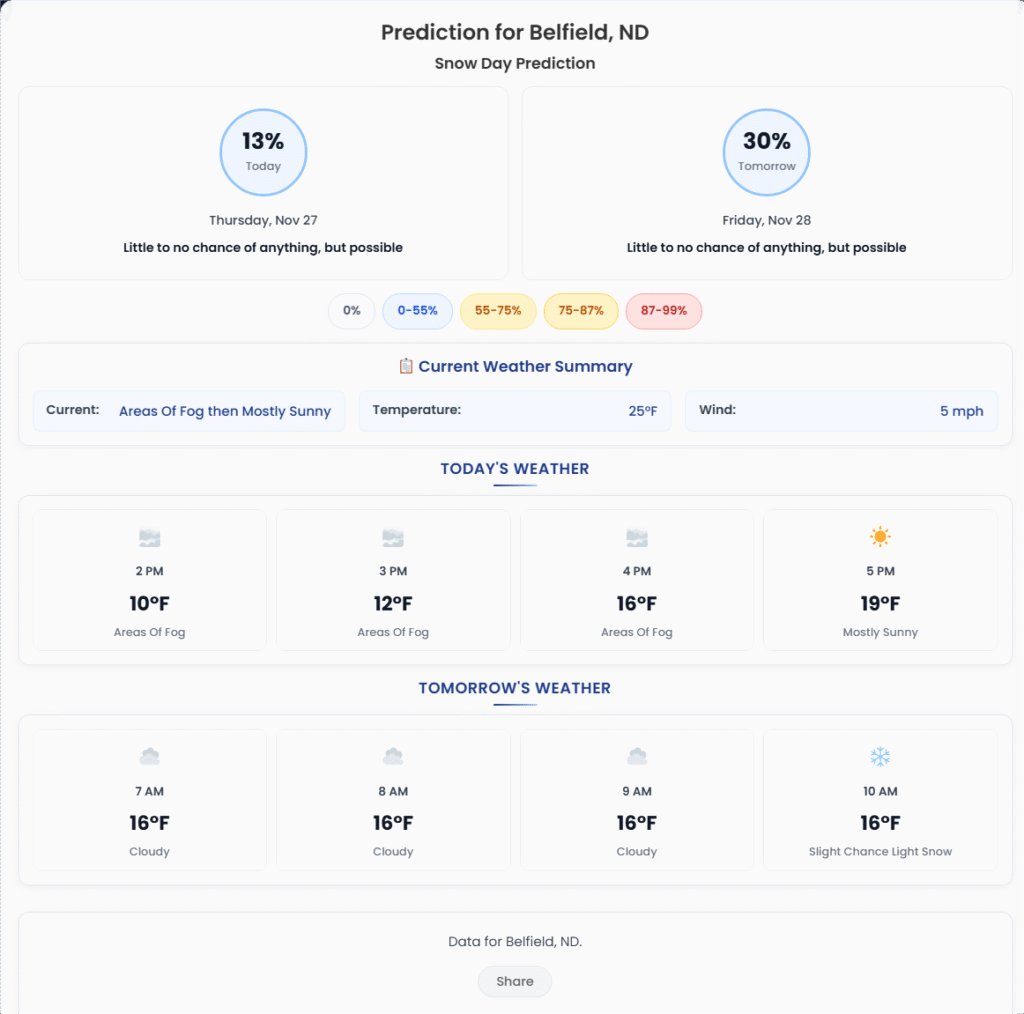
Are you tired of waiting for the local news scroll to see your school’s name? Today, we use advanced meteorological models to stay ahead of the curve. These tools take into account humidity, wind gust speed, and even the “Albedo effect” (how much sunlight is reflected off the ground).
Using a tool like our site offers several 7 Powerful Snow Day Calculator Benefits, such as reducing anxiety for students and helping parents plan their work schedules. Instead of guessing, these tools provide a percentage-based probability that helps you understand the likelihood of a “Free Day.”
What to Do When School is Cancelled
How should you spend your time when the “Polar Vortex” keeps you inside? While the temptation is to play video games all day, there are plenty of ways to make the most of the cold.
If it’s safe to go out briefly, you can explore Snow Day Activities for Kids: Turning a Chill into a Thrill. However, when it’s “cancel-school-cold,” staying inside is usually the best bet. You can use the time to catch up on reading or plan for upcoming holidays by checking How Many Days Until Winter?.
Preparing for the Next Big Freeze

How can you stay prepared if the school stays open during a cold snap? If the “Snow Day Calculator” says there is only a 10% chance of a closure, you need to be ready to brave the elements.
- The Three-Layer Rule: Always wear a base layer (like a long-sleeve tee), an insulating layer (like a sweatshirt), and a protective outer layer (a heavy coat).
- Cover Your Face: A scarf or face mask can significantly reduce the risk of frostnip on your cheeks and nose.
- Check the Forecast: Keep an eye on How to Predict School Closures Based on Weather Forecasts? to understand how to read the maps yourself.
The Educational Impact of Cold Days
Do “Cold Days” affect your learning differently than “Snow Days”? Interestingly, because cold days often come in “snaps” (several days in a row of extreme cold), they can be more disruptive to the school calendar than a single big snowstorm. Teachers often have to reorganize lesson plans, and many districts are now moving toward “E-Learning” or “Virtual Days” to keep the momentum going. To understand the pros and cons of this, take a look at How Snow Days Affect Student Learning? The Surprising Truth.
Summary of Closing Criteria
Does your school meet the criteria for a cold-weather closure? While every district is unique, here is a general summary of what leads to a “No School” announcement:
| Factor | Typical “Warning” Level | Typical “Closure” Level |
| Wind Chill | -10°F | -20°F or lower |
| Air Temperature | 0°F | -10°F (depends on region) |
| Bus Safety | Delayed Starts | Total Gelling / Failure |
| Walking Distance | Extra Caution | Over 0.5 miles unsafe |
If you see these conditions appearing on your local weather app, it’s a good time to check for the 5 Signs a Snow Day Is Coming.
Final Conclusion: Safety First
Is a day off from school worth the cold? Ultimately, school closures are about one thing: Safety. Whether it’s the risk of a bus sliding on black ice (which you can read about in How much snow cancels school?) or the danger of sub-zero wind chills, districts would rather play it safe than risk a student getting hurt.
By staying informed with tools like the Snow Day Calculator Accuracy guide, you can stay one step ahead of the weather. Winter is a beautiful season, but it demands respect. Whether you are hoping for a day of sledding or just a day to stay under your blankets with a cup of cocoa, understanding the science of the cold helps you appreciate those rare and wonderful “Snow Days.”
Stay warm out there, and keep your eyes on the forecast!
FAQs About How Cold Does It Have to Be to Cancel School?
How cold does it have to be for school to be canceled?
Most school districts consider canceling classes when the wind chill hits -15°F to -20°F. At these temperatures, frostbite can occur on exposed skin in 30 minutes. However, southern states may close at much higher temperatures because they lack the infrastructure to handle any freezing weather safely.
What is the difference between air temperature and wind chill?
Air temperature is what the thermometer reads, while wind chill is how cold it “feels” on your skin due to the wind. Wind strips away your body’s heat faster, making a 0°F day feel like -20°F. Schools prioritize the wind chill because it is a more accurate measure of the risk of frostbite for students.
Can schools stay open if the buses won’t start?
Usually, no. If a large portion of the bus fleet has “gelled” diesel engines due to extreme cold, the district cannot safely transport students. Since many families rely on busing, a failure in transportation almost always leads to a cold-weather delay or a full cancellation of the school day.
Is it safe to walk to school in sub-zero temperatures?
Walking in sub-zero weather is risky without professional-grade winter gear. If the wind chill is below -15°F, it is generally considered unsafe for children to walk long distances or wait at bus stops. Always follow the “three-layer rule” and cover your face to prevent heat loss and skin damage.
How accurate are snow day calculators for cold weather?
Modern calculators are very reliable because they use real-time National Weather Service data. They analyze temperature, wind speed, and humidity to predict closures. While no tool is 100% perfect, checking a Snow Day Predictor gives you a data-backed head start on your morning.