

There’s almost no better feeling in the world. You wake up, maybe because your alarm went off, maybe just because the world outside seems a little too quiet. You peek through the curtains and see it: a thick, white blanket of snow covering everything.
Your first thought? “Please, let it be a snow day.”
You grab your phone, fingers crossed, and refresh your school district’s page or check the news. And then you see the magical words: SCHOOLS ARE CLOSED.
The pure joy! It’s a free day. A day for sleeping in, building a snowman, playing video games, or binge-watching a new show with a cup of hot chocolate. It feels like a mini-vacation gifted to you by the weather.
But have you ever stopped to wonder what that “free day” really means for your education? When you miss a day of school, especially an unplanned one, what happens to all the learning that was supposed to take place? Does one day off really matter?
It’s a bigger question than you might think. We all love a good snow day, but they have real, measurable effects on how students learn. The answer isn’t as simple as “snow days are bad” or “snow days are good.” The truth is, they’re a little bit of both.
Let’s dig into what really happens to our brains and our school schedules when the snow starts to fall.
The Big Question: Do Snow Days Hurt Learning?
This is the main concern for teachers, principals, and parents. School isn’t just a place to hang out; it’s where you build knowledge, piece by piece, day by day. When you suddenly remove one of those building blocks, it can mess with the whole structure.
The Problem of “Lost Instructional Time”
“Instructional time” is the fancy term for the time you actually spend in class learning stuff. In the United States, a typical school year is about 180 days long. Your teachers have a plan, called a curriculum, that maps out exactly what you need to learn in those 180 days to be ready for the next grade.
Think of it like a TV show with 180 episodes. A snow day is like someone suddenly deleting an episode right in the middle of an important story.
When you come back, the teacher has a choice: Do they skip the “deleted episode” and hope you can figure out what’s going on? Or do they try to explain the entire missed episode in just 10 minutes so they can get back on schedule?
Neither option is great. This interruption breaks the “learning rhythm.” If you were just about to finally understand a tough math concept or were in the middle of a big history project, a snow day can stop that momentum in its tracks.
The “Snow Stumble” vs. The “Summer Slide”
You’ve probably heard of the “summer slide.” It’s the well-known fact that when students are off for three months, they tend to forget some of what they learned. When they come back in the fall, teachers have to spend the first few weeks just reviewing old material.
A snow day can create a mini-version of this, a “snow stumble.” This is especially true if you get a bunch of snow days clustered together. A Monday off here, a Thursday off there… it all adds up.
Fact: Studies have shown a clear link between school attendance and academic achievement. Research from places like Harvard University has found that missing school days—even for valid reasons like being sick or, yes, weather—can negatively impact student performance. When you add up all those snow days over a 12-year school career, it can equal weeks of lost learning.
Who Is Affected the Most?
A snow day doesn’t affect every student in the same way. For some kids, a day off is just a fun break. But for others, it’s a real problem.
- Students who need extra help: What if you were supposed to get special help with reading or math on that snow day? That’s a lost opportunity that can be hard to reschedule.
- Students from low-income families: For many students, school is where they get their most reliable, healthy meals (like breakfast and lunch). A snow day can mean a day of food insecurity.
- Students who need a safe space: School is also a safe, warm, and stable environment for many kids. A day at home isn’t always a “vacation” if the home environment is stressful.
For these students, a snow day isn’t just about missing algebra. It’s about missing meals, safety, and critical support. This is a huge part of the “student learning” picture that often gets forgotten.
The Snow Day “Make-Up” Dilemma

So, you missed a day. You can just add it to the end of the year, right? Problem solved?
Well, not exactly. How schools handle make-up days is a huge debate, and it has a big impact on learning.
Option 1: Tacking Days on in June
This is the classic solution. Your school calendar has a few “emergency days” built in. If you use them for snow, you just add those days to the end of the school year. Instead of finishing on June 10th, you might finish on June 13th.
But think about it. What is your brain like in the middle of June?
You’re probably thinking about summer, swimming, and sleeping in. The weather is hot. Your friends are already making plans. It is very hard to focus on a final exam about the Civil War when the ice cream truck is driving by your window.
Fact: Many educators agree that learning in mid-to-late June is just not as effective. Students and teachers are both tired and “checked out.” So, while you’re technically in the building for 180 days, that last make-up day might not be a very productive one.
Option 2: Squeezing It All In (The “Cram” Method)
The other option is to not add days to the end of the year. Instead, teachers have to cover the same amount of material in less time. This is the “cram” method.
This is where the real damage to learning can happen.
To get through everything, teachers might have to make tough choices.
- “Sorry, class, we don’t have time for the fun science lab I planned.”
- “We’re going to have to skip the class debate on that novel.”
- “Here’s a worksheet instead of the group project.”
All the fun, hands-on, creative parts of learning—the things that make school interesting and make lessons “stick”—are often the first things to get cut. The teacher is forced to rush through the “must-know” facts just to make sure you’re ready for the big standardized tests at the end of the year. This makes learning less engaging and more stressful.
Option 3: The New Solution (The “E-Learning” Day)
In the last few years, a new option has popped up: the “e-learning day” or “virtual learning day.”
The idea is simple: school is closed, but learning is not. You get an email from your teachers with assignments to do at home. You might have to log onto a website, watch a video, or even join a class on Zoom or Google Meet.
The Pros:
- No lost instructional time! The learning rhythm isn’t broken.
- No need to add make-up days in June.
- It teaches students skills like time management and working independently.
The Cons (and they are BIG):
- The Digital Divide: This is the most important issue. What about students who don’t have a good computer at home? Or families that can’t afford high-speed internet? What if multiple kids have to share one laptop? An e-learning day can be incredibly unfair to these students, putting them even further behind.
- Parent Help: What if your parents have to work and can’t be home to help you?
- Quality of Learning: Let’s be honest. Is doing a worksheet at your kitchen table the same as being in a classroom with your teacher and friends? It’s much harder to ask questions, have a discussion, or stay focused.
Because of these problems, many districts are moving away from e-learning days and just calling it a good, old-fashioned snow day.
Wait… Could Snow Days Actually Be Good for Students?
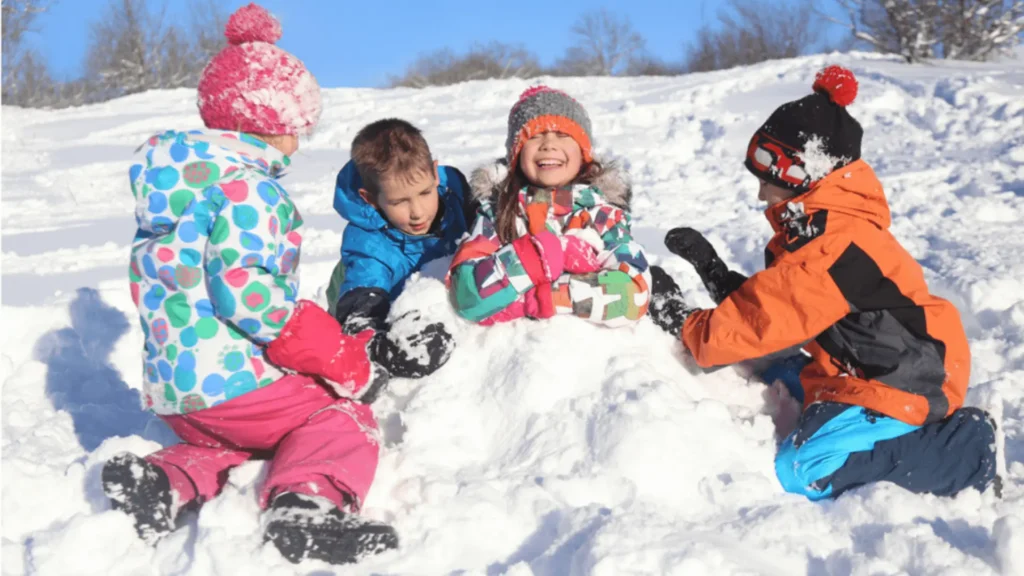
So far, it sounds like snow days are mostly bad for learning. But this is where the story gets more interesting. What if those “lost” days are actually giving us something we desperately need?
The Power of a Mental Health Day
Let’s be real: school is stressful. Between classes, homework, studying for tests, clubs, sports, and trying to have a social life, you are busy. Your brain is working hard all the time.
Sometimes, your brain just needs a break.
A snow day is the perfect “mental health day” because it’s a surprise. You don’t have to feel guilty about taking it off, because everyone else is off, too! It’s a day to turn off your alarm, relax, and let your brain “defragment,” just like a computer.
Fact: Experts on stress and learning agree that a burned-out student can’t learn effectively. You need rest to process information and store memories. A single, unexpected day off can lower stress, improve your mood, and help you come back to school on Tuesday feeling refreshed, recharged, and more ready to learn.
Time for “Unstructured Play” and Creativity
What do you do on a snow day?
You might go sledding with friends. You might build an epic snow fort. You might try to bake cookies or write a story or finally organize your room. This is called “unstructured play” (or just “messing around”).
Fact: Child development experts love unstructured play. It’s not a “waste of time”; it’s a different, and very important, kind of learning.
- When you build a snow fort, you’re learning about engineering, physics, and teamwork.
- When you’re trying to figure out the best sledding route, you’re learning about problem-solving and risk assessment.
- When you’re just bored and trying to find something to do, you’re building creativity and independence.
You don’t get much time for this kind of creative, self-directed learning during a packed school day. Snow days provide it in large, wonderful, snowy handfuls.
A Surprise Bonus: Family & Community Time
On a lot of snow days, parents get the day off from work, too. This is a rare, unplanned chance for families to spend time together.
Maybe you all watch a movie in the afternoon. Maybe you shovel the driveway together (and have a snowball fight). Maybe you play a board game.
These simple moments of family bonding are incredibly important for a student’s overall well-being. Feeling connected and supported at home is a super-strong foundation for being a successful and happy student at school.
The Real Issue: How Many Snow Days?
So, are snow days good or bad? The real answer probably depends on how many you get.
One Day vs. One Week
The effect of one snow day on your education is tiny. Almost zero. Your teacher can easily adjust, and the mental health benefits probably outweigh the 45 minutes of math you missed.
The problem starts when you get a lot of snow days.
If your school closes for a day, that’s a break. If your school closes for a solid week because of a massive blizzard, that’s a problem. That’s when you see real learning loss. That’s when teachers have to start “cramming” and cutting fun projects.
Fact: Most studies on learning loss look at “chronic absenteeism,” which is defined as missing 10% or more of the school year. That’s 18 days! A couple of snow days isn’t chronic absenteeism. But a historically bad winter in some parts of the country can push students into that danger zone.
The “Ripple Effect”
The other issue isn’t just the day you miss, but the “ripple effect” it has on the whole school schedule.
- The chapter test you were supposed to have on Tuesday now gets moved to Wednesday.
- That means the review day you were supposed toF have on Monday (but was a snow day) and the in-class essay you were supposed to start on Wednesday (which is now test day) are all messed up.
- The teacher is now scrambling to re-arrange the entire week, while also trying to teach new stuff.
This “ripple effect” can be more disruptive to the flow of learning than the single missed day itself. It creates stress for both the teacher and the students.
So, What’s the Final Verdict on Snow Days?
After looking at all the facts, here’s the most honest answer: A few snow days are probably more helpful than harmful.
Snow days are a trade-off.
- The Bad: They interrupt the school schedule, can force teachers to rush or “cram” lessons, and can be a real hardship for students who rely on school for meals and support.
- The Good: They provide a critical mental health break from the stress of school, give students time for creative play, and offer a rare chance for family bonding.
The magic of a snow day is in its rarity. It’s a special event. As long as these days don’t pile up and turn into a weeks-long “snowpocalypse,” the benefits of a well-rested, happier, and less-stressed student will almost always make up for a few missed lessons.
So, the next time you’re on your phone, refreshing the Snow Day Calculator app and hoping for that wonderful news, you can relax. That one day off isn’t going to derail your education.
Enjoy the hot chocolate. Build the snowman. You’re not just “missing school”—you’re taking a day for a different, just as important, kind of learning.
What do you think? Are snow days a good thing or a bad thing for learning? Let us know your thoughts in the comments below!
FAQ’s About How Snow Days Affect Student Learning?
Are snow days good or bad for student learning?
It’s a trade-off. A few snow days are good. They act as mental health breaks that lower stress and boost creativity. But too many snow days are bad. They can cause real learning loss, force teachers to rush lessons, and disrupt the entire school schedule.
Will just one snow day hurt my grades?
No, one snow day almost certainly won’t hurt your grades. Your education is a long journey. While it might shuffle the schedule for a few days (like moving a test), the mental rest you get usually makes up for the single missed day. You’ll catch up quickly.
Why don’t all schools just use “e-learning days” instead?
E-learning days aren’t fair to everyone. This “digital divide” means some students don’t have good computers or reliable internet at home. Others have parents who can’t stay home to help. To keep things equal, many schools prefer a true day off for everyone.
How is a day off from school actually good for learning?
Your brain needs rest to learn! Snow days are great mental health breaks that lower stress. They also give you time for “unstructured play” (like building a snow fort), which teaches problem-solving and creativity. You return to school refreshed and more ready to learn.
Do snow days affect all students the same way?
No, they affect students very differently. For some, it’s a fun break. But for students who rely on school for healthy meals, a safe environment, or special learning support, an unexpected day off can be a real hardship and a lost opportunity.